Bedtime emotions
My child is scared of the dark
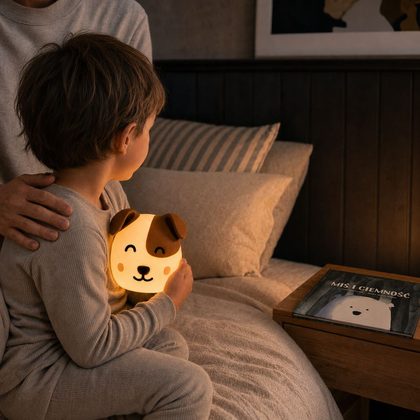
Once the light goes out, a familiar room can look completely different to a child. Instead of insisting that there is nothing to be afraid of, it helps to acknowledge the fear and calmly show that familiar things are still where they were.
Try this today
Before bed, walk around the room with your child and name a few familiar things. Then dim the main light.
How can the lamp help?
Warm, low light can stay in the room as a point of reference. Place the lamp away from your child's face and do not aim the light at their eyes.
My child does not want to be left alone
For some children the moment a parent leaves the room is simply hard. It helps when the end of the evening is calm and predictable, and the goodbye looks the same each day.
Try this today
Agree on one simple goodbye, for example a hug and the same short good-night sentence.
How can the lamp help?
The lamp can stay on after you leave, so the move toward sleep does not mean complete darkness straight away.
My child struggles to end the day
Moving from play to sleep can be hard, especially after a busy day. Stopping an activity suddenly often increases resistance. It is easier for a child to get ready when they know in advance that play is about to end.
Try this today
A few minutes earlier, announce the next step: "One more game, then pajamas and a book."
How can the lamp help?
Changing the main light to something warm and dimmer can become one of the steady cues that the quieter part of the evening is starting.
Big emotions show up in the evening
At the end of the day tiredness can make it harder for a child to handle anger, tears or frustration. It does not mean the whole evening routine has stopped working.
Try this today
Instead of trying to calm your child straight away, name what you see: "I can see you are tired and angry." Give them a moment before you move on.
How can the lamp help?
Dimming the main light reduces further stimulation. A lamp will not make big feelings go away, but it can be part of a calmer end to the day.
Sleep and night-time wake-ups
My child takes a long time to fall asleep
After an active day a child may need time to slow down. A longer evening does not always mean something is wrong, so instead of adding more instructions it helps to reduce stimulation step by step.
Try this today
Ten or fifteen minutes before sleep, dim the light and go back to the familiar order: pajamas, book, hug.
How can the lamp help?
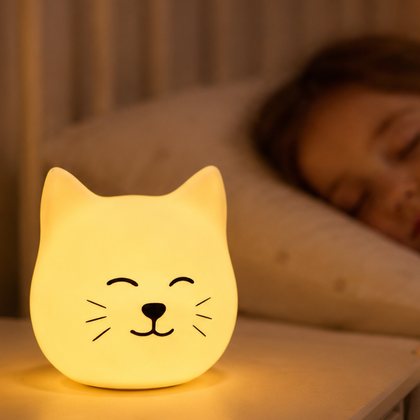
Low brightness and warm light can become a steady part of the move from activity to rest.
My child wakes up in the middle of the night
A short wake-up does not mean the whole evening routine has to start again. At night it is best to keep stimulation low and the pace calm.
Try this today
If your child needs you there, respond calmly, without bright light and without turning it into an event.
How can the lamp help?
The lowest brightness is enough to find a pacifier, take a drink of water or straighten the blanket without lighting up the whole room.
My child calls for a parent after lights out
Once the routine is over, a child may still need confirmation that a parent is close. It helps when the way the evening ends is predictable.
Try this today
Agree on a simple way to close the evening. If it works in your home, it can be one extra look into the room after a few minutes.
How can the lamp help?
The lamp can stay on at low brightness after you leave, so the room does not go straight into complete darkness.
My child wants to sleep with the lamp on
Some children prefer to fall asleep with a little light. There is no need to give it up straight away if it helps your child end the evening more calmly.
Try this today
Instead of switching on a strong light, set the lamp to the lowest brightness you can.
How can the lamp help?
For the night, choose dimmed light and place the lamp away from your child's face. You can use the automatic switch-off after 30 minutes or the all-night mode, depending on what you need.
Questions about light
Which color should I choose?
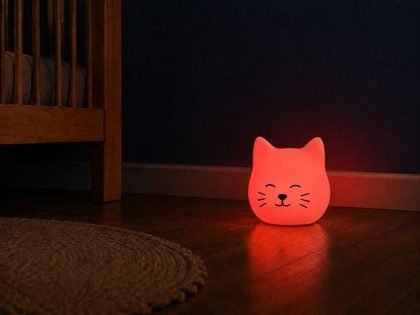
There is no single right color for the whole evening. Warm white works when more light is needed, for example while reading or getting ready for bed. Amber suits the quieter part of the evening. Red is a good choice when only a little light is needed, for example while falling asleep or during a night-time wake-up.
How can the lamp help?
Every Moonlight Friends lamp offers three warm light colors, so you can match them to what you are doing.
How bright should the light be?
The closer to sleep, the less light is usually needed. The point is not to sit in the dark from the start of the evening, but to reduce strong lighting step by step.
Try this today
Leave as much light as reading needs, then choose a lower brightness.
How can the lamp help?
Set the lowest level that is still comfortable and lets you move safely around the room.
Where is the best place for the lamp?
Out of your child's direct line of sight. The lamp should light up the surroundings rather than shine straight into their eyes.
Try this today
Put it where the light does not fall directly on your child's face.
How can the lamp help?
You can place the freestanding version wherever it is needed and fix the hanging version in a convenient spot, following the product instructions.
Can the lamp stay on all night?
Yes. Moonlight Friends lamps have an all-night mode and an automatic switch-off after 30 minutes. That does not mean the lamp has to be on all night. If the light is no longer needed once your child is asleep, you can use the automatic switch-off.
How can the lamp help?
If the lamp stays on for the night, set the lowest brightness you can and place it away from your child's face.


